















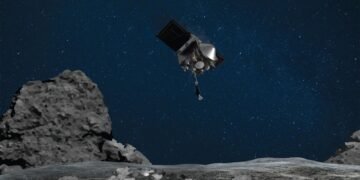








The book, his first release through Clover Press — the boutique publisher created by Robbie Robbins and Ted Adams, founders of IDW — follows The Well, Wiesenfeld’s previous coffee table collection, and measures 10” square. It will be released in a number of different editions, including a hardcover, with or without slipcase, as well as a softcover, and a limited edition hardcover with additional archival prints.
Travelers will be crowdfunded, with a Kickstarter campaign for the book beginning today. To mark the launch of the project, Wiesenfeld shared three of the most important moments in his career to date withThe Hollywood Reporter.
“After high school I went to college in Manhattan,” Wiesenfeld recalls. “It was an art school that focused on abstract and conceptual art. It took me about a year to realize that I was not suited for that type of art. The nineties was a bleak time in the art world if one was interested in the figure or realism. The only art that excited me was in comic books.”
After some initial apathy, his big break in comics came when meeting an idol at a convention.
“I saw a line queuing up to talk to Neal Adams, one of my childhood heroes, who had a table there,” Wiesenfeld remembers. “I was too nervous to try to talk to Neal, much less show him my work. Thank god my friend Scott literally pushed me into the line and said ‘What have you got to lose?’ As the line got shorter, I watched Neal tear through the portfolios of other would-be comics artists. He was merciless. To say that I was frightened when it was my turn is an understatement. He flipped through my pages, and said ‘These are very honest.’ He told me to do a few more pages and bring them to his company, Continuity Comics. A week or so later I did, and he gave me a job as the penciller on one of the books he published.”
More than a decade later — following a comics career that included work on DC’s Batman: Black and White, as well as cover artwork for Y: The Last Man — Wiesenfeld had moved into the world of fine art… or, at least, that was the plan.
“In 2005, I was 33 years old. I had graduated from school five years before, and my fledgling career as an oil painting was having trouble getting off the ground. Even though I worked diligently in the studio, something was missing,” Wiesenfeld says. “I decided to get outside, away from the familiar, and maybe the solution could be found with perspective. I packed my car with camping and oil painting gear, and spent the next three months making landscape paintings on the coast of the Pacific. By the end of the trip I had about 70 paintings. The paintings themselves were, mostly, not gallery-worthy, but the experience had been priceless. I found the answer to my dilemma was that I needed to get out of my own head, see the world, and experience it by painting it. It was enormously helpful in letting go of my ego, and allowing the artwork to take on its own life.”
The effort was worth it, as Wiesenfeld’s third and final high point makes clear.
“In 2009 I had my first solo exhibition of paintings at Arcadia Gallery in New York. It was a big deal to me. I arrived on opening night after dark, and saw my name in big letters, and inside the lighted windows the gallery was full of people. When I walked in, the gallery owner, Steve Diamant, told me that the director J.J. Abrams had just purchased one of my paintings from the show. It was a once-in-a-lifetime moment that I’ll never forget.”
Abrams is far from the only familiar customer of Wiesenfeld’s work; his paintings have also been purchased by Paul Feig, Joss Whedon and Laura Linney.
The Kickstarter campaign for Travelers, containing more information about the book itself and the rewards attached to the campaign, can be found here. For more examples of the artwork contained in the book, look below.